

The school holidays should be a time for fun. This week, they began with two families losing a child to water.
What Happened This Week
In Besut, Terengganu, a 12-year-old Year 6 pupil drowned after going swimming with friends in an irrigation canal (NST report). In Kota Bharu, Kelantan, a 13-year-old went to the river with five friends to look for clams. His mother said he could not swim. He was swept into deeper water, and his friends tried to help but could not save him (Bernama and Sinar Harian reports).
We are deeply sorry for both families. We are not naming the children out of respect. We are writing this because, with the holidays starting, many more children will be near pools, rivers, canals and beaches, and there are simple things every parent can do now.
7 Water-Safety Steps Every Parent Should Know Before the School Holidays
1. Know Where Your Child Is Swimming, and Who Is Watching
Most parents ask “where are you going?” and stop there. Also ask who will be with them, and whether any adult will be watching the water. Children playing together often assume someone else is keeping an eye out.
2. Keep Children Away from Canals, Drains and Rivers, Especially After Rain
Canals, drains and rivers can look calm and shallow from the bank. You cannot see the depth or the current from there, and the ground can drop away quickly. Rain can make conditions worse. If your child is not a confident swimmer, treat these places as off-limits.
3. Non-Swimmers Should Stay Out of Rivers, Even at “Shallow” Spots
A spot that seems shallow can change within a step or two. A child who cannot swim can be in trouble very quickly. Tell your children plainly: if you can’t swim, don’t go in, however shallow it looks.
4. Teach “Reach or Throw, Don’t Go”
Brave friends often become victims too. If someone is drowning, the safest way to help is from outside the water:
- Reach out with a stick, branch or rope while staying on the bank.
- Throw anything that floats, such as a bottle, cooler box or float.
- Don’t go in after them. A panicking person can pull a rescuer under.
Practise saying it with your children until they remember it.
5. Shout for Help and Call 999 Right Away
Teach every child to shout for an adult and call 999 straight away. Do not wait to see whether the situation fixes itself.
6. Keep Your Eyes on the Spot Where They Went Under
If someone goes under, keep looking at the place where you last saw them. Point it out to the adults and rescuers who arrive. It helps them find the person faster.
7. Learn CPR, Because the First Minutes Count Most
Once a person is out of the water, if they are not breathing normally, start CPR right away and keep going until help arrives. Knowing what to do gives parents and teens the confidence to act in those first critical minutes.
How Red Rescue Can Help
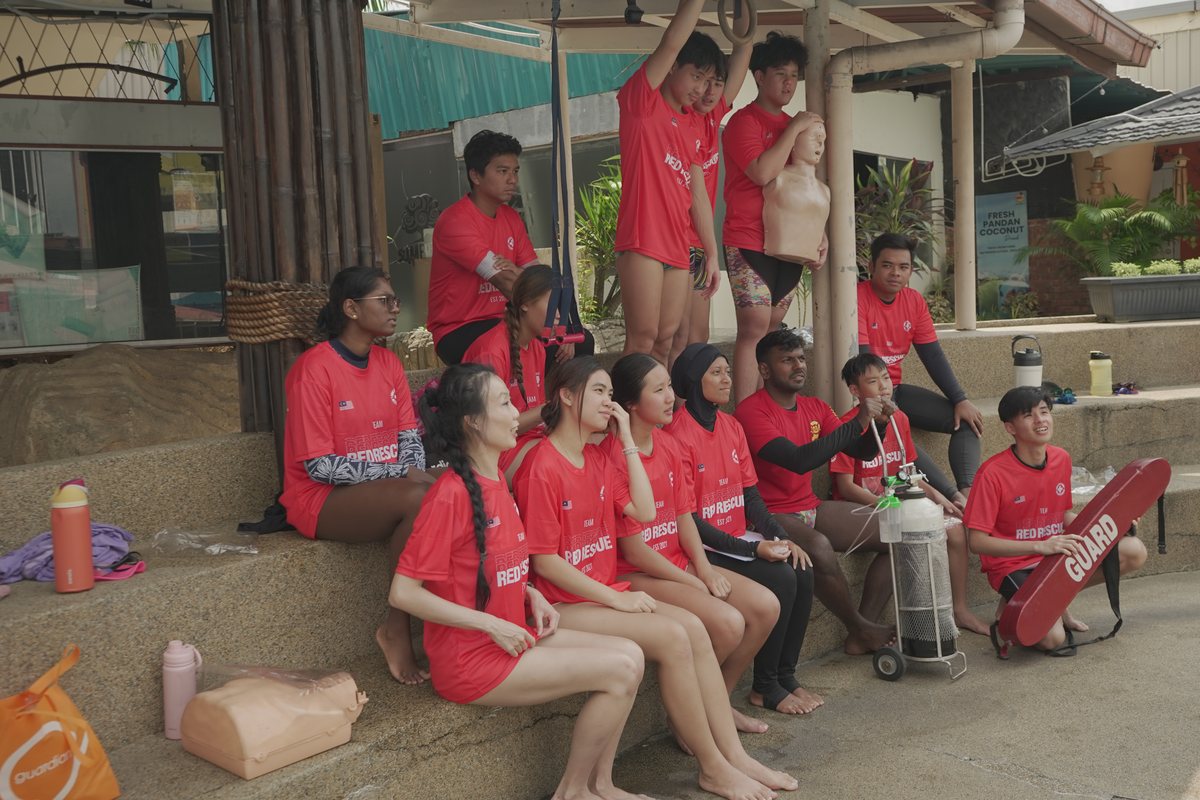
Red Rescue Malaysia trains children, teens and adults in water safety, CPR and lifeguarding.
December Lifeguard Junior Camp (Ages 7 to 13)
For children aged 7 to 13: our December Lifeguard Junior Camp runs on 15 and 16 December, 9am to 5pm, at Kolam Renang Universiti Malaya. Children learn water-safety and rescue skills with real lifeguard trainers. Places are filling.
See the camp page and book a place
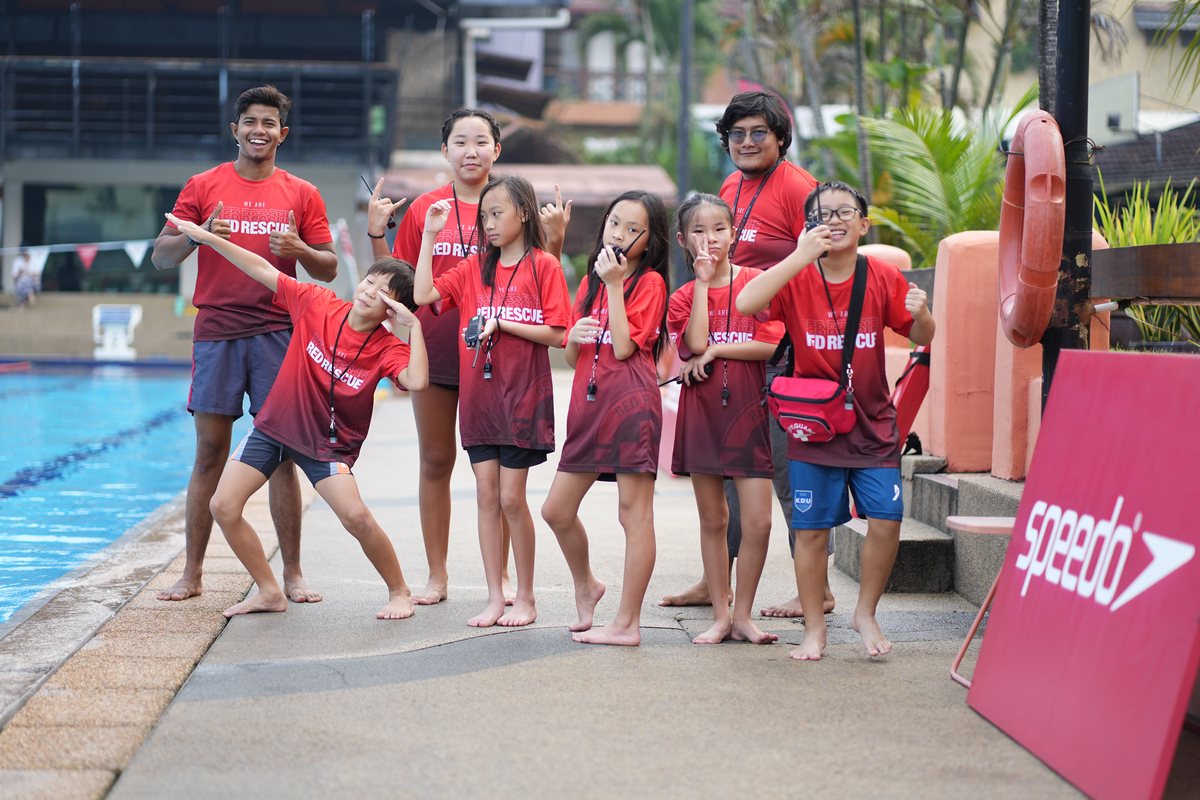
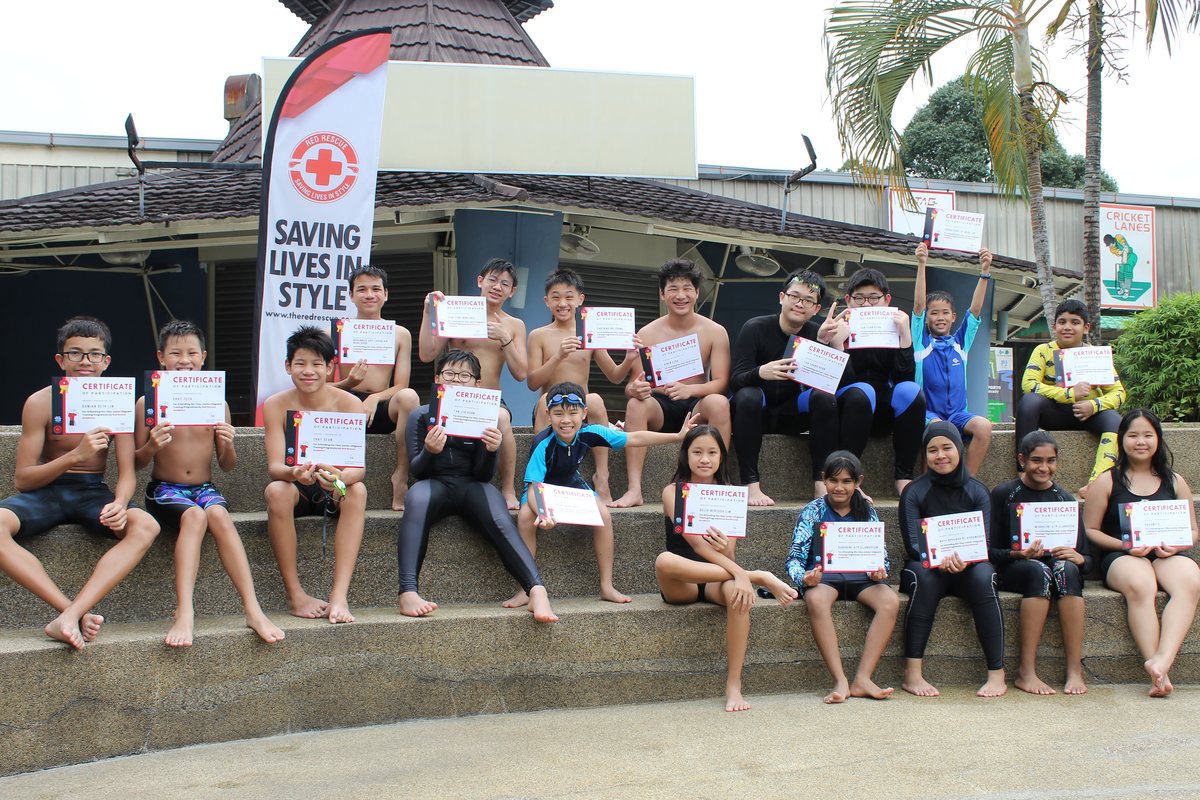
Our past camps at Red Rescue
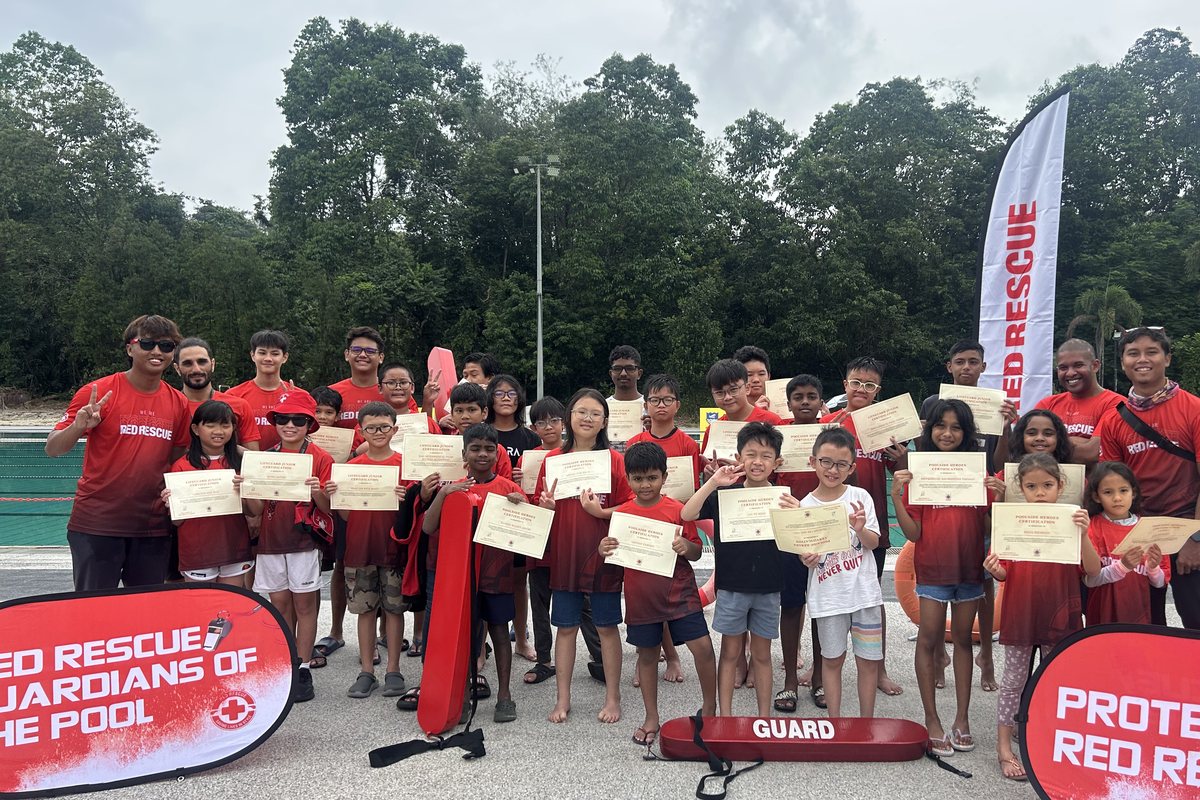
Red Rescue has trained 1,500+ certified lifeguards. Here are some of the groups from our past camps, many holding the certificates they worked hard for.
CPR/First Aid Courses (Parents and Teens 14+)
For parents and teens (14+): our CPR/First Aid courses give you the confidence to act when seconds matter.
WhatsApp us for the next course date: +6016-334 9013
Before Your Child Heads Out This Holiday: Water-Safety Checklist
Print or screenshot this checklist and share it with the family:
- Where are they swimming, and who is watching?
- Stay away from canals, drains and rivers, especially after rain.
- Non-swimmers stay out of the water.
- Reach or Throw, Don’t Go.
- Shout, then call 999.
- Keep your eyes on the spot.
- Start CPR if they are not breathing normally.
A few minutes of conversation today could save a life this holiday.
Manigandaa Keertan, CEO & Founder, Red Rescue Malaysia
Frequently asked questions
What should you do if someone is drowning?
Follow “Reach or Throw, Don’t Go.” Reach out with a stick, branch or rope while staying on the bank, or throw anything that floats, such as a bottle or cooler box. Do not go into the water after them, because a panicking person can pull a rescuer under. Shout for help and call 999 straight away.
Is it safe for children to swim in rivers, canals or drains in Malaysia?
Canals, drains and rivers can look calm and shallow from the bank, but you cannot see the depth or the current, and the ground can drop away quickly. Rain can make conditions worse. If your child is not a confident swimmer, treat these places as off-limits, however shallow they look.
What number should I call for a drowning emergency in Malaysia?
Call 999 straight away. Teach every child to shout for an adult and call 999 immediately, without waiting to see whether the situation fixes itself. While waiting for help, keep your eyes on the spot where the person went under and point it out to rescuers when they arrive.
Where can my child learn water safety during the December school holidays?
Red Rescue runs a December Lifeguard Junior Camp for children aged 7 to 13 on 15 and 16 December, 9am to 5pm, at Kolam Renang Universiti Malaya. Children learn water-safety and rescue skills with real lifeguard trainers. Places are filling, so book early through the camp page.
Does Red Rescue offer CPR and first aid courses for parents?
Yes. Red Rescue runs CPR/First Aid courses for parents and teens aged 14 and above, giving them the confidence to act when seconds matter. For the next course date, WhatsApp Red Rescue at +6016-334 9013.
Sources
- NST: 12-year-old pupil found drowned in Besut irrigation canal
- Bernama: Report on the Kota Bharu incident
- Sinar Harian: Remaja hilang di sungai ditemukan lemas
Follow us on Facebook: Red Rescue Facebook Page
Our Contact Number: +60163349013
Contact us for inquiries: Red Rescue Contact Page